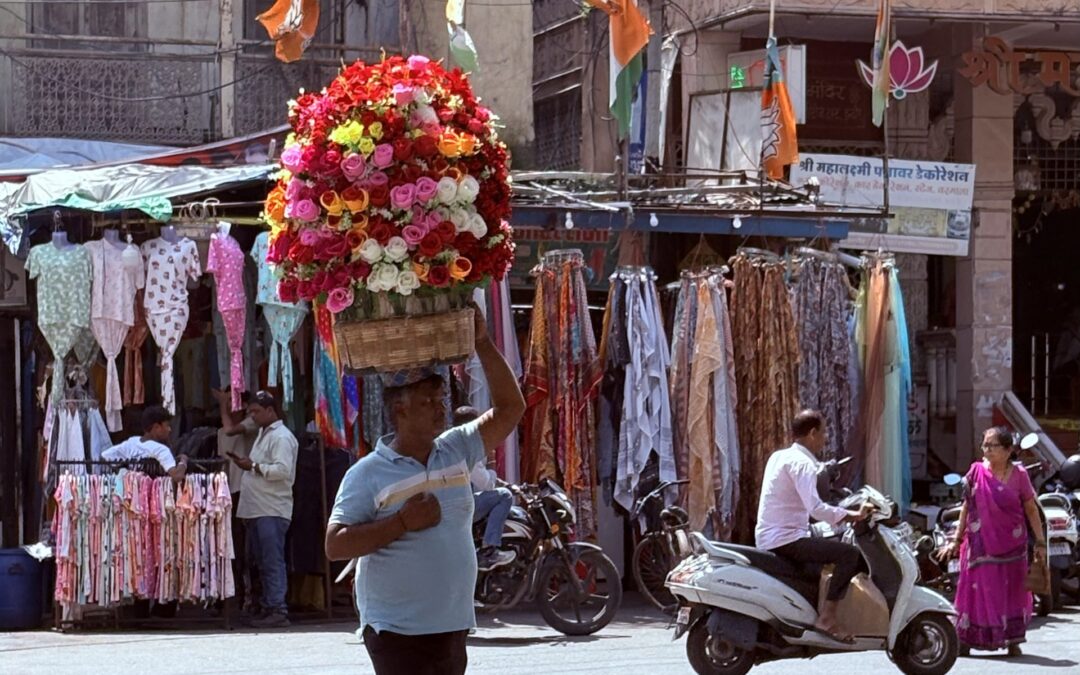
It is my first time in India, and honestly, it hit me like sensory overload on level 100.
The noise, the traffic, the smells, the colors. Everything felt loud, fast, intense. Coming from a culture where order is quiet and structured, I felt overwhelmed almost immediately. It was an all-or-nothing kind of place, and my brain didn’t quite know where to rest. From a psychology perspective, it was fascinating, and truly uncomfortable at the same time.
But after a while, something shifted.
I started to notice that the chaos wasn’t random. The traffic, for example, looked insane at first. No clear lanes, constant honking, movement everywhere. But there was order. The honks weren’t angry, they were communication. Almost like a language. After a few days, it felt less like noise and more like a concert where everyone somehow knew when to move, stop, or squeeze through.
That realization changed how I experienced everything else.
I also fell in love with the food. The variety of spices wasn’t just about taste; it felt cultural, emotional, alive. Each meal was intense but balanced in its own way. Psychology talks a lot about sensory richness and memory, and Indian food is unforgettable in exactly that sense.
What stayed with me the most, though, were the people. So many were friendly, open, and genuinely curious. Conversations happened easily, on the street, in shops, anywhere. That social warmth softened the intensity of everything else and made me feel welcomed, even when I felt out of place.
India taught me something important: order doesn’t always look calm. Sometimes it’s loud, colorful, and constantly moving but still deeply functional. For my brain, it was challenging. For my perspective, it was eye-opening.
And maybe psychology isn’t just about reducing chaos. Maybe it’s about learning how to exist within it.